
Home · Barcode types · Data Matrix
무료 Data Matrix 생성기: 제약 DSCSA, FDA UDI, PCB용 GS1 대응 2D 바코드
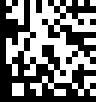
Data Matrix는 데이터를 흑백 모듈 패턴으로 인코딩하는 정사각형(또는 직사각형) 2D 바코드입니다. 작은 마크 하나에 몇 글자부터 최대 2,335개 영숫자까지 저장할 수 있으며 — 내장 Reed-Solomon 오류 정정 덕분에 심볼의 약 30%가 손상되어도 읽힙니다.
Validator
Paste an existing Data Matrix into the field above. We compute the check digit if you provide just the payload, verify it if you provide the full code, and refuse to render if the check digit is wrong — so anything that renders here is guaranteed to scan.
산업용이 주류입니다: 의약품 라벨(DSCSA 시리얼라이제이션), 금속에 직접 마킹된 자동차 부품, 전자 부품 트레이, 수술 도구 추적, 그리고 선형 바코드에 너무 좁은 공간에 의미 있는 데이터를 인코딩해야 하는 모든 응용.
Structure
정사각형 크기 10×10 모듈(숫자 3 / 영숫자 6)부터 144×144(영숫자 2,335 / 숫자 3,116)까지. 좁은 라벨 띠용 직사각형 크기 제공. 스캐너가 코드 위치·방향을 파악하는 고정 'L자' 파인더 패턴과 타이밍 패턴 포함.
When to use Data Matrix
- 금속·플라스틱 부품 직접 마킹(레이저 에칭 또는 도트 핀)
- DSCSA / EU FMD / 중국 NMPA 준수용 의약품 시리얼라이제이션
- FDA 규정에 따른 의료기기 고유기기식별(UDI)
- PCB 및 전자 부품 트레이 마킹
- 멸균 주기 전반의 수술 도구 추적
- 매우 제한된 인쇄 영역에서의 고밀도 인코딩
Where it's required
- 미국(DSCSA), EU(FMD), 일본, 중국 등 주요 시장의 의약품 포장
- FDA UDI 규정 대상 의료기기
- AIAG 표준에 따른 자동차 산업
- 다수의 항공우주·방산 공급망 워크플로
FAQ
Data Matrix는 QR 코드와 같나요?
둘 다 2D 매트릭스 바코드이나 용도가 다릅니다. Data Matrix는 L자 파인더 패턴을 쓰고 훨씬 조밀(2.5×2.5mm에서 안정 스캔)하여 제약 시리얼라이제이션, FDA UDI, PCB 마킹의 표준입니다. QR은 세 모서리 사각형 파인더를 쓰고 더 크며 마케팅·스마트폰 스캔의 소비자용 기본입니다.
GS1 Data Matrix와 QR 코드의 차이는?
GS1 Data Matrix는 필수 GS1 데이터 식별자 구문이 있는 Data Matrix 심볼로지입니다 — 시작에 FNC1 문자, 그 다음 (AI)데이터 쌍. 제약 인코딩 예: (01)00614141999996(17)281231(10)LOT123(21)SN9876은 GTIN, 유효기간, 로트, 시리얼을 인코딩. DSCSA, FDA UDI, EU FMD 모두 GS1 DataMatrix를 명시적으로 요구합니다.
QR 코드와 Data Matrix 중 무엇이 나은가요?
용도에 따라 다릅니다. 소비자용(URL, 마케팅, 결제, 메뉴)은 모든 스마트폰이 기본 인식하므로 QR이 유리. 산업용(제약 시리얼라이제이션, PCB 마킹, 의료기기)은 매우 작은 크기(2.5mm) 스캔, 더 많은 손상 허용, 규제 산업의 GS1 표준이라 Data Matrix가 유리.
Data Matrix는 바코드인가요?
예 — Data Matrix는 2D 바코드(매트릭스 바코드)입니다. 평행 바가 아닌 흑백 모듈 격자에 데이터를 인코딩합니다. 모든 바코드와 마찬가지로 스캔 시 문자로 변환됩니다.
GS1 Data Matrix 예시는?
의약품의 GS1 DataMatrix는 (01)00614141999996(17)281231(10)LOT123(21)SN9876을 인코딩할 수 있습니다 — GTIN 00614141999996, 유효기간 2028년 12월 31일, 로트 LOT123, 시리얼 SN9876. 아래 가독 텍스트는 보통 시각 검증을 위해 동일 AI와 값을 인쇄합니다.
Data Matrix를 휴대폰으로 스캔할 수 있나요?
예 — 최신 iOS·Android 카메라는 Data Matrix를 기본 디코딩합니다. 구형 1D 레이저 스캐너는 읽지 못하므로 2D 이미징 스캐너나 카메라 리더가 필요합니다. Orca Scan, Scandit 같은 앱이 모든 스마트폰에서 지원합니다.
Related generators
- Code 128 — 무료 Code 128 바코드 생성기입니다.