
Home · Platforms · Etsy · UPC-A
Do You Need a UPC for Etsy? GTIN Rules, Google Shopping & How to Add Them
Etsy added the optional GTIN field in 2020 — buyers don't see it but Etsy's algorithm and Google Shopping do. Listings with valid GTINs surface in Etsy search more aggressively for product-match queries and become eligible for Google Shopping syndication.
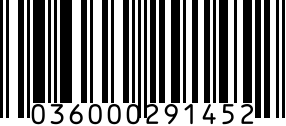
UPC-A is the right choice for most North American sellers. EAN-13 if you're selling globally. Either is accepted in Etsy's GTIN field.
Step by step
- 1
Generate a UPC-A
Use the generator above. For Google Shopping production, get a verified GS1-derived UPC from our Buy UPC Codes page (brand-registered listings need codes licensed in your own name).
- 2
Open the listing in Etsy
Listings > [your listing] > Inventory and pricing section.
- 3
Paste into the GTIN/UPC field
Each variation gets its own GTIN. Use the variation drop-down to set per-variant codes.
- 4
Save and republish
Etsy revalidates the listing. Search algorithm picks up the new identifier within ~24 hours.
Gotchas
- Etsy GTINs must be unique per listing. Don't reuse the same UPC for similar listings.
- For handmade/vintage items where no real GTIN exists, leave the field blank — fabricated codes can hurt your shop's trust score.
- Google Shopping (via Etsy sync) validates against GS1. GS1-derived codes pass for standard listings; brand-registered listings need codes licensed in your own name.
FAQ
Do I have to fill the GTIN field on Etsy?
No — it's optional. But filling it correctly improves both Etsy internal search and Google Shopping eligibility.
What if my product is one-of-a-kind?
Leave the GTIN field blank. GTINs are for replicable products with consistent SKUs. A unique art piece doesn't need one.
Related
- UPC-A generator — standalone generator without Etsy steps.
- All Etsy barcode guides
- All platforms