
Home · Industries · Pharmaceutical
Códigos de barras farmacéuticos: Serialización DSCSA, NDC y GS1 Data Matrix para Drug Supply Chain Compliance
La serialización de medicamentos es innegociable. DSCSA en EE.UU., FMD en Europa — cada unidad vendible necesita un Data Matrix 2D codificando GTIN + lote + caducidad + serial único. Listo para Phase-2, compatible con EPCIS, generador gratuito en navegador.
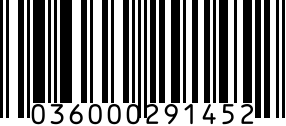
El packaging farma es el entorno de códigos más regulado. Drug Supply Chain Security Act (DSCSA, EE.UU.) y Falsified Medicines Directive (FMD, UE) exigen serialización a nivel unidad — cada paquete vendible debe llevar serial único en Data Matrix 2D, no solo UPC. Estructura GS1: (01) GTIN, (17) caducidad, (10) lote, (21) serial único.
Los datos también fluyen aguas arriba a hubs industriales — red Authorized Trading Partner DSCSA, EU Hub, sistemas nacionales (ANVISA Brasil, SFDA Saudí). El código es lo visible; el intercambio de datos es donde vive la complejidad real.
Recommended barcode formats
Requerido por DSCSA (EE.UU.), FMD (UE), SFDA Saudí, ANVISA (Brasil). Codifica GTIN + lote + caducidad + serial formato GS1.
GS1-128 para agregación a nivel caja (caja padre contiene 100 unidades serializadas). Requerido para DSCSA EDDS.
Aún requerido en frontal retail para escaneo en farmacia POS de OTC. Rx solo-hospital puede no necesitar UPC.
Regulatory notes
- DSCSA Stabilization Period (EE.UU.): Activo hasta mayo 2026 — FDA no exige agregación todavía pero sí serialización unidad. Desde 27 mayo 2026, agregación completa + EPCIS exigibles.
- FMD (UE): Obligatorio desde feb 2019 — cada paquete Rx con serial único + cierre evidente. NMVOs verifican en dispensación.
- ANVISA (Brasil): Serialización SNCM requerida para todo Rx desde 2022.
- SFDA (Arabia Saudí): Serialización unidad + agregación obligatorias vía sistema Rasd.
- FDA UDI (medical devices) es regla separada — ver página Healthcare.
Step by step
- 1
Obtén rango GTIN GS1 para productos farma
GS1 US para fármacos distribuidos EE.UU. Cada formato NDC necesita su propio GTIN — botella 60 vs 90 tabletas son GTINs diferentes.
- 2
Configura generación de serial
Conecta plataforma de serialización (Tracelink, SAP ATTP, Adents, Antares Vision) que asigna seriales únicos en el namespace de tu GTIN. NO uses seriales secuenciales — randomiza.
- 3
Genera GS1 DataMatrix con AIs
Formato: (01)GTIN-14(17)YYMMDD-caducidad(10)lote(21)serial. Usa nuestro generador Data Matrix con prefijo FNC1. Imprime mínimo 5×5mm.
- 4
Aplica códigos de agregación
Imprime GS1-128 en cada nivel caja/bundle conteniendo unidades serializadas. Los datos de agregación deben reportarse vía EPCIS a partners DSCSA.
- 5
Intercambia datos vía EPCIS
Envía eventos de agregación a tus authorized trading partners (mayoristas, distribuidores, farmacias) usando EPCIS 1.2+. Eventos T1, T2, T3 — commissioning, packing, shipping.
Gotchas
- DSCSA acepta solo estándares GS1 — formatos propietarios son rechazados por mayoristas.
- SFDA Saudí Rasd exige reportar serial ANTES de enviar a Arabia Saudí — no después. Muchas plantas lo omiten y el producto queda en aduana.
- FMD UE no aplica a OTC (excepto whitelist específica) — no sobreingenierízes tu línea OTC.
- Calidad de impresión Data Matrix importa: grado B (ISO 15415) o superior requerido para DSCSA. Mala impresión = caja rechazada.
- Productos combinación (fármaco + dispositivo) pueden requerir AMBOS serialización DSCSA Y etiquetado UDI — coordina con asuntos regulatorios.
FAQ
¿Necesito UPC y Data Matrix?
En productos OTC retail, sí — UPC para POS farmacia, Data Matrix para serialización DSCSA. En Rx solo-hospital, Data Matrix solo es suficiente.
¿Diferencia entre DSCSA y FMD?
DSCSA es EE.UU., FMD es UE. Ambos requieren Data Matrix 2D con GTIN + lote + caducidad + serial, pero los sistemas de intercambio difieren. DSCSA usa red ATP con EPCIS. FMD usa Hub UE centralizado + repositorios nacionales.
¿Qué tan pequeño puede ser el Data Matrix?
Estándar GS1: tamaño celda mínimo 0.25mm (X-dimensión), módulo mínimo 0.5mm. Práctico en packaging farma: ~5×5mm para etiqueta de botella. Por debajo, escaneo poco fiable.
¿Puedo serializar in-house o necesito proveedor?
Técnicamente posible construir, pero todo fabricante farma usa Tracelink, SAP ATTP, Adents o Antares — el intercambio EPCIS DSCSA y auditorías son demasiado complejos sin un equipo regulatorio IT de 5 personas.
¿Qué pasa durante el DSCSA Stabilization Period?
Hasta mayo 2026, FDA no exige agregación completa ni EPCIS pero sí serialización unidad. Desde 27 mayo 2026, exigibilidad completa — farmacias y mayoristas rechazarán producto no serializado o no agregado.
Related
Related industries
- Códigos de barras para ropa y moda: UPC, FNSKU, colgantes RFID
- Códigos para etiquetas de activos: Code 128 y Code 39 para seguimiento de activos TI
- Códigos de barras para libros: ISBN-13, EAN Bookland y autopublicación
- Códigos de barras para marcas de cosméticos: UPC, EAN y códigos de lote para skincare, maquillaje y SKUs de belleza