
Home · Learn · Cos'è uno SKU? Le Stock Keeping Unit spiegate
Cos'è uno SKU? Le Stock Keeping Unit spiegate
Lo SKU è il tuo codice prodotto INTERNO — scegli il formato e cosa significa. L'UPC è il codice ESTERNO che il mondo usa per identificare lo stesso prodotto. Sono complementari, non intercambiabili.
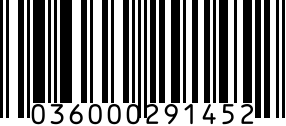
SKU sta per Stock Keeping Unit (unità di gestione magazzino). È un codice che la tua azienda crea internamente per tracciare una specifica variante di prodotto nel tuo inventario, magazzino, sistema POS, software contabile e report. Il formato lo scegli tu — decidi cifre, lettere, lunghezza e significato. La maggior parte degli SKU codifica informazioni utili per le tue operazioni: tipo prodotto, colore, taglia, stagione, fornitore, ecc.
Lo SKU è fondamentalmente diverso dall'UPC. L'UPC è l'identificatore ESTERNO — un codice a 12 cifre emesso da GS1 che i rivenditori nel mondo usano per identificare il tuo prodotto alla cassa. Lo SKU è INTERNO — solo la tua azienda lo usa. La maggior parte dei rivenditori traccia entrambi: SKU per le operazioni interne, UPC per la compatibilità esterna rivenditore/marketplace.
Strutture SKU tipiche
Gli SKU codificano significato. Un rivenditore di abbigliamento potrebbe usare 'UOMO-TSHIRT-ROSSA-XL-S26' (genere + prodotto + colore + taglia + stagione). Un distributore all'ingrosso potrebbe usare '47-BLU-12PK-CA' (fornitore 47 + colore + dimensione pack + magazzino). I venditori Amazon FBA usano spesso '[abbrev-marchio]-[prodotto]-[variante]'. Non c'è standard — la regola è la coerenza interna. Lunghezza comune: 8-20 caratteri; formato comune: alfanumerico con trattini o underscore.
SKU vs UPC vs GTIN vs MPN — disambiguazione rapida
SKU = il tuo codice interno (gratis, il tuo formato). UPC = codice al dettaglio a 12 cifre di GS1 (a pagamento, formato fisso). GTIN = termine generico per TUTTI gli identificatori GS1 — include UPC (GTIN-12), EAN-13 (GTIN-13), GTIN-14 per le casse. MPN = Manufacturer Part Number — tipicamente l'identificatore del produttore a monte (es. l'MPN di Apple per l'iPhone 15 è 'MR8X3LL/A'). Un singolo prodotto su Amazon ha tutti e quattro: SKU (il tuo codice), UPC (codice GS1), GTIN (nome API Amazon per l'UPC), MPN (codice Apple per gli iPhone).
Quando serve ciascuno
Solo SKU: operazione minima, canale di vendita unico, nessuna logistica di terzi. UPC + SKU: vendere su Amazon, Shopify, Etsy, eBay, Walmart — UPC per l'identificazione marketplace, SKU per il tuo tracciamento inventario. UPC + GTIN-14 + SKU: spedire casse a rivenditori all'ingrosso — GTIN-14 sul cartone esterno (reso come ITF-14), UPC su ogni unità al dettaglio dentro, SKU nel tuo sistema di gestione magazzino. UPC + MPN + SKU: dropshipping o rivendita — l'MPN identifica il prodotto del produttore a monte, l'UPC identifica lo SKU al dettaglio, lo SKU è il tuo codice interno.
Come i rivenditori si aspettano SKU + UPC insieme
La maggior parte dei marketplace al dettaglio accetta lo SKU come identificatore lato venditore (ciò che mostra il tuo pannello) e l'UPC come identificatore lato acquirente (ciò che collega l'annuncio agli altri venditori dello stesso prodotto). Amazon: il campo 'Seller SKU' è tuo; 'Product ID' è UPC/EAN/ISBN/ASIN. Shopify: il campo 'SKU' è tuo; il campo barcode contiene l'UPC. Walmart Marketplace: 'Item SKU' è interno; 'UPC'/'GTIN' è l'identificatore globale. Etsy ed eBay: SKU facoltativo ma consigliato; UPC facoltativo ma premiato con migliore visibilità in ricerca.
FAQ
Cosa significa SKU?
Stock Keeping Unit (unità di gestione magazzino). È un codice che la tua azienda crea internamente per tracciare una specifica variante di prodotto in inventario, magazzino, POS e contabilità. Coniato negli anni '60 da IBM e adottato come termine universale per i codici prodotto interni.
Uno SKU è uguale a un codice a barre?
No. Uno SKU è il tuo codice prodotto interno (scegli il formato). Un codice a barre è la rappresentazione visiva di qualsiasi identificatore — UPC, EAN, Code 128, ecc. PUOI rendere uno SKU come codice a barre Code 128 per uso interno di magazzino, ma è facoltativo; gli SKU funzionano bene come testo semplice in database e report.
Uno SKU è uguale a un UPC?
No. Lo SKU è interno (il tuo formato, le tue regole). L'UPC è esterno (codice al dettaglio a 12 cifre emesso da GS1). La maggior parte dei prodotti ha entrambi: SKU per il tuo tracciamento inventario, UPC per la compatibilità marketplace e rivenditore. I campi 'Seller SKU' e 'Product ID' di Amazon li tengono separati.
Ho bisogno di uno SKU su Amazon?
Amazon assegna automaticamente uno 'Seller SKU' generico se non ne fornisci uno, ma è fortemente consigliato fornire il tuo — il tuo codice interno è l'unico riferimento di ritorno al tuo magazzino e contabilità. Lo SKU autogenerato da Amazon è opaco e non aiuta a tracciare l'inventario. Personalizza il campo SKU alla creazione dell'annuncio.
Posso semplicemente usare l'UPC come SKU?
Tecnicamente sì — puoi copiare l'UPC a 12 cifre nel tuo campo SKU. Ma l'UPC non codifica nulla di utile per le TUE operazioni (identifica il prodotto ai rivenditori, non al tuo magazzino). Uno SKU significativo come 'TSHIRT-ROSSA-XL-S26' è più utile internamente di '012345678905'. La maggior parte dei venditori usa entrambi: UPC per l'identificazione esterna, SKU per il tracciamento interno.
Il mio SKU dovrebbe contenere attributi prodotto?
Sì, è tutto il senso. Codifica abbastanza info per identificare la variante a colpo d'occhio: 'STILE-COLORE-TAGLIA' o 'CATEGORIA-FORNITORE-VARIANTE'. Evita di codificare ciò che cambia spesso (prezzo, lotto fornitore) poiché gli SKU devono essere stabili a vita. Non includere info personali né intelligence competitiva (codici di margine) poiché gli SKU sono spesso visibili ai clienti.
Related generators
Need a real barcode now?
Generate a valid UPC-A barcode in seconds, no watermark. Free for casual use; paid plans from $9/mo for higher volume.