
Home · Learn · What Is GS1? The Organization Behind Every Authentic Retail Barcode
What Is GS1? The Organization Behind Every Authentic Retail Barcode
GS1 is the standards body that runs the barcode system. Every legitimate UPC, EAN, ITF-14, and GS1 DataMatrix on a product anywhere in the world traces back to a GS1 Company Prefix.
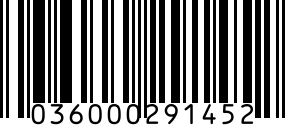
GS1 is a global not-for-profit organization that develops and maintains the most widely used identification standards in commerce. Best known for inventing the UPC barcode in 1973, GS1 now manages a much broader system: GTIN (the universal product number), GLN (location codes), SSCC (shipping container codes), GS1-128 (logistics barcodes), GS1 DataMatrix (used for pharmaceutical serialization), EPCIS (supply-chain data exchange), and the EPC RFID standard.
If you have ever bought a product at a retailer, scanned a book ISBN, or seen a 2D code on a prescription drug, you have used a GS1 standard. The organization operates as a federation: GS1 Global Office sits in Brussels, and there are 120+ national member organizations — GS1 US, GS1 UK, GS1 Germany, GS1 Italy, GS1 Japan, and so on. Each national affiliate licenses prefixes within their assigned country code namespace.
What GS1 stands for and where it came from
GS1 is short for 'Global Standards One' — though the acronym is now used more than the full name. The organization was formed in 2005 by merging the Uniform Code Council (UCC, which had run the US UPC system since 1973) with EAN International (which had run the European 13-digit system since 1977). The merger unified the two parallel systems under one global ombrello and renamed every format under the GTIN umbrella: UPC-A became GTIN-12, EAN-13 became GTIN-13, ITF-14 became GTIN-14, EAN-8 became GTIN-8.
What you actually license from GS1
You don't license barcodes — you license a Company Prefix. A GS1 Company Prefix is a numeric namespace (typically 7-10 digits) assigned exclusively to your company. Within that namespace you create as many GTINs (product numbers) as you have items, append a check digit, and render the result as a UPC-A or EAN-13 barcode. The Company Prefix is what guarantees uniqueness across the global supply chain: no two companies can be issued the same prefix, so no two products from different brands can collide.
What it costs in the US (GS1 US)
GS1 Company Prefix licensing is tiered by GTIN count: an initial fee plus a mandatory annual renewal that rises with volume, and pricing varies significantly between countries' member organizations. Renewal matters: lapse it and your prefix becomes 'inactive' in the GS1 GEPIR registry, which is what Amazon and Walmart now check. For standard marketplace listings, GS1-derived codes from our Buy UPC Codes page start at $5 with no renewal fees.
Why retailers require GS1
Amazon Brand Registry, Walmart Marketplace, Target Plus, Whole Foods, Costco, Kroger, and most other major retailers verify that submitted GTINs trace back to a legitimately licensed GS1 Company Prefix. Verification happens against the GS1 GEPIR database (gepir.gs1.org) — a global registry of every licensed prefix and the company that holds it. Verified GS1-derived UPCs (like the ones on our Buy UPC Codes page) trace to a legitimately licensed prefix and work for standard marketplace listings; brand-registered listings, where the prefix must resolve to your own company, need codes licensed in your own name. This enforcement tightened significantly in 2020-2023.
Standards GS1 owns beyond retail barcodes
Five additional standards worth knowing: (1) GLN (Global Location Number) — 13-digit identifier for physical locations, used in EDI. (2) SSCC (Serial Shipping Container Code) — 18-digit identifier on logistics labels, scanned in Code 128. (3) GS1-128 — Code 128 with Application Identifiers like (01) for GTIN, (10) for batch, (17) for expiry. (4) GS1 DataMatrix — the 2D barcode used for DSCSA pharma serialization and EU FMD. (5) EPCIS — a data-exchange standard for tracking product events across the supply chain (commissioned, packed, shipped, received). DSCSA enforcement in 2026 has made EPCIS adoption mandatory for US pharma.
When GS1 is NOT required
Three scenarios where you do NOT need GS1: (1) Books — ISBN is administered separately by national ISBN agencies, though ISBN now embeds into a GS1-style EAN-13 with prefix 978 or 979. (2) Internal-only barcodes — warehouse asset tags, ticket stubs, employee badges — use Code 128 or QR Code without any GS1 prefix. (3) Amazon-only sellers with GTIN Exemption approval — Amazon allows you to list without a UPC if you have an approved exemption (handmade items, certain brands without retail intent). Beyond these, any product going through a retailer or marketplace needs a GS1-issued GTIN.
FAQ
What does GS1 stand for?
GS1 stands for 'Global Standards One'. The name was adopted in 2005 when the Uniform Code Council (UCC) merged with EAN International to unify North American and European barcode systems into a single global standards body. The acronym is used far more often than the full name.
Why do I need GS1?
Three reasons: (1) Major retailers (Amazon, Walmart, Target, Whole Foods, Costco) verify your GTINs against the GS1 GEPIR registry — non-GS1 numbers are rejected. (2) A licensed GS1 Company Prefix guarantees your product numbers are unique globally — no collisions with another brand's products. (3) Many international markets require GS1 by regulation (e.g., DSCSA in US pharma, EU FMD in European pharma, food traceability rules in multiple countries).
How much does it cost to join GS1?
GS1 member organizations license Company Prefixes in tiers — an initial fee plus a mandatory annual renewal that scales with how many GTINs you need, and rates vary by country. Lapsed prefixes deactivate in the GEPIR registry. If you just need verified codes for standard marketplace listings, our Buy UPC Codes page starts at $5 with no renewal.
Is GS1 the only barcode company?
GS1 is the only issuer of GS1 Company Prefixes. There are also GS1-derived code resellers — including our Buy UPC Codes page — selling UPCs from legitimately licensed pre-2002 prefixes; those work for standard marketplace listings, while brand-registered listings need codes licensed in the seller's own name. For internal-only barcodes (warehouse asset tags, event tickets), you can freely use Code 128 or QR Code without any GS1 affiliation.
Does Walmart use GS1?
Yes — Walmart explicitly requires a GS1 Company Prefix on every supplier application document. Walmart's Retail Link system verifies submitted GTINs against the GS1 GEPIR registry; numbers that don't trace to a licensed prefix get rejected. This applies to both Walmart Marketplace (online) and Walmart Stores (brick and mortar). The same is true of Sam's Club, owned by Walmart.
Is GS1 US legit?
Yes — GS1 US is the official GS1 affiliate for the United States, headquartered in Lawrenceville, NJ. It's a not-for-profit accredited by ANSI and recognized internationally as the sole US issuer of GS1 Company Prefixes. The frequent confusion is with barcode RESELLERS — a separate, legitimate category selling GS1-derived codes from previously licensed prefixes; those work for standard marketplace listings (see our Buy UPC Codes page), while brand-registered sellers license codes in their own name through GS1 US.
Who owns GS1?
Nobody — GS1 is a not-for-profit, member-owned federation. Each of the 120+ national GS1 affiliates is a separate not-for-profit governed by its industry members. GS1 Global Office in Brussels coordinates the standards but doesn't 'own' the system in a commercial sense. Membership fees fund the operation. The organization has no shareholders and pays no dividends.
What is GS1 used for in Amazon?
Amazon uses GS1 to verify product authenticity and prevent counterfeit listings. When you submit a new ASIN, Amazon's GTIN Validation checks the submitted UPC/EAN against the GS1 GEPIR database. If your number traces to a different company's licensed prefix (or to no prefix at all), Amazon throws an 'invalid GTIN' or 'GTIN mismatch' error. This is also why purchased-resold UPCs from before 2002 no longer work on Amazon — they were licensed to the original company, not to you.
Related generators
Need a real barcode now?
Generate a valid UPC-A barcode in seconds, no watermark. Free for casual use; paid plans from $9/mo for higher volume.