
Home · Learn · ¿Qué es GS1? La organización detrás de cada código de barras minorista auténtico
¿Qué es GS1? La organización detrás de cada código de barras minorista auténtico
GS1 es el organismo de normas que gestiona el sistema de códigos de barras. Cada UPC, EAN, ITF-14 y GS1 DataMatrix legítimo en un producto en cualquier parte del mundo se remonta a un Prefijo de Empresa GS1.
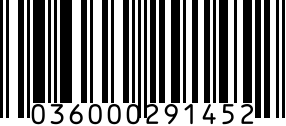
GS1 es una organización mundial sin fines de lucro que desarrolla y mantiene los estándares de identificación más usados en el comercio. Conocida por inventar el código de barras UPC en 1973, GS1 gestiona ahora un sistema mucho más amplio: GTIN (el número de producto universal), GLN (códigos de ubicación), SSCC (códigos de contenedor de envío), GS1-128 (códigos logísticos), GS1 DataMatrix (usado para serialización farmacéutica), EPCIS (intercambio de datos de cadena de suministro) y el estándar RFID EPC.
Si alguna vez has comprado un producto en una tienda, escaneado el ISBN de un libro o visto un código 2D en un medicamento, has usado un estándar GS1. La organización funciona como federación: la Oficina Mundial GS1 está en Bruselas, y hay más de 120 organizaciones miembro nacionales — GS1 US, GS1 España, GS1 UK, GS1 Germany, etc. Cada filial nacional licencia prefijos dentro del espacio de nombres de su código de país.
Qué significa GS1 y de dónde viene
GS1 es la abreviatura de 'Global Standards One' — aunque el acrónimo se usa más que el nombre completo. La organización se formó en 2005 fusionando el Uniform Code Council (UCC, que gestionaba el sistema UPC de EE.UU. desde 1973) con EAN International (que gestionaba el sistema europeo de 13 dígitos desde 1977). La fusión unificó los dos sistemas paralelos bajo un paraguas mundial y renombró cada formato bajo la sombrilla GTIN: UPC-A pasó a GTIN-12, EAN-13 a GTIN-13, ITF-14 a GTIN-14, EAN-8 a GTIN-8.
Qué licencias realmente de GS1
No licencias códigos de barras — licencias un Prefijo de Empresa. Un Prefijo de Empresa GS1 es un espacio de nombres numérico (típicamente 7-10 dígitos) asignado exclusivamente a tu empresa. Dentro de ese espacio creas tantos GTIN (números de producto) como artículos tengas, añades un dígito de control y representas el resultado como código de barras UPC-A o EAN-13. El Prefijo de Empresa garantiza unicidad en toda la cadena de suministro mundial: no pueden emitirse el mismo prefijo a dos empresas, así que dos productos de marcas distintas no pueden colisionar.
Cuánto cuesta la membresía GS1
Las organizaciones miembro de GS1 cobran por tramos según el número de GTIN que licencies: una cuota inicial más una renovación anual que crece con la capacidad. Las tarifas concretas varían por país — consulta la organización miembro de GS1 de tu país. La renovación es obligatoria: si caduca, tu prefijo queda 'inactivo' en el registro GS1 GEPIR. Si solo necesitas unos pocos códigos para listados estándar de marketplace, los códigos verificados derivados de GS1 de nuestra página Comprar códigos UPC (desde $5) evitan las cuotas de membresía.
Por qué los minoristas exigen GS1
Amazon Brand Registry, Walmart Marketplace, Target Plus, Whole Foods, Costco, Kroger y la mayoría de grandes minoristas verifican que los GTIN enviados se remontan a un Prefijo de Empresa GS1 legítimamente licenciado. La verificación se hace contra la base GS1 GEPIR (gepir.gs1.org) — un registro mundial de cada prefijo licenciado y la empresa que lo posee. Los códigos derivados de GS1 se remontan a un prefijo legítimamente licenciado y funcionan para listados estándar de marketplace; los programas de marca como Amazon Brand Registry exigen además que el código esté licenciado a nombre del propio vendedor — esos vendedores necesitan códigos a su propio nombre.
Estándares que GS1 posee más allá de los códigos minoristas
Cinco estándares adicionales a conocer: (1) GLN (Número de Ubicación Global) — identificador de 13 dígitos para ubicaciones físicas, usado en EDI. (2) SSCC (Código de Contenedor de Envío Serial) — identificador de 18 dígitos en etiquetas logísticas, escaneado en Code 128. (3) GS1-128 — Code 128 con identificadores de aplicación como (01) para GTIN, (10) para lote, (17) para caducidad. (4) GS1 DataMatrix — el código 2D usado para serialización farmacéutica DSCSA y EU FMD. (5) EPCIS — un estándar de intercambio de datos para rastrear eventos de producto por la cadena de suministro. La aplicación del DSCSA en 2026 ha hecho obligatoria la adopción de EPCIS para la farmacéutica de EE.UU.
Cuándo NO se requiere GS1
Tres escenarios donde NO necesitas GS1: (1) Libros — el ISBN lo administra por separado la Agencia del ISBN de cada país (en España, la Agencia del ISBN), aunque el ISBN ahora se integra en un EAN-13 estilo GS1 con prefijo 978 o 979. (2) Códigos solo internos — etiquetas de activos de almacén, talones de entradas, credenciales de empleados — usa Code 128 o QR Code sin ningún prefijo GS1. (3) Vendedores solo-Amazon con exención GTIN aprobada — Amazon te permite anunciar sin UPC si tienes una exención aprobada (artículos hechos a mano, ciertas marcas sin intención minorista). Más allá de esto, cualquier producto que pase por un minorista o mercado necesita un GTIN emitido por GS1.
FAQ
¿Qué significa GS1?
GS1 significa 'Global Standards One'. El nombre se adoptó en 2005 cuando el Uniform Code Council (UCC) se fusionó con EAN International para unificar los sistemas de códigos de barras norteamericano y europeo en un único organismo mundial de normas. El acrónimo se usa mucho más que el nombre completo.
¿Por qué necesito GS1?
Tres razones: (1) Los grandes minoristas (Amazon, Walmart, Target, Whole Foods, Costco) verifican tus GTIN contra el registro GS1 GEPIR — los números no-GS1 se rechazan. (2) Un Prefijo de Empresa GS1 licenciado garantiza que tus números de producto son únicos mundialmente. (3) Muchos mercados internacionales exigen GS1 por regulación (DSCSA farma EE.UU., EU FMD farma europea, reglas de trazabilidad alimentaria en varios países).
¿Cuánto cuesta unirse a GS1?
Las cuotas van por tramos según el número de GTIN: una cuota inicial más renovación anual, con tarifas que varían por país — consulta la organización miembro de GS1 de tu país. La renovación anual es obligatoria; los prefijos caducados se desactivan en el registro GEPIR. Para necesidades pequeñas, los códigos verificados derivados de GS1 de nuestra página Comprar códigos UPC empiezan desde $5 sin cuotas anuales.
¿Es GS1 la única empresa de códigos de barras?
GS1 es la raíz de todo GTIN minorista legítimo. También existen códigos derivados de GS1 — números provenientes de prefijos ya licenciados — que funcionan para listados estándar de marketplace; los vendedores con marca registrada necesitan códigos licenciados a su propio nombre. Para códigos solo internos (etiquetas de activos, entradas), puedes usar libremente Code 128 o QR Code sin afiliación GS1 — pero en cuanto un producto entra al retail, el número debe remontarse al sistema GS1.
¿Walmart usa GS1?
Sí — Walmart exige explícitamente un Prefijo de Empresa GS1 en cada documento de solicitud de proveedor. El sistema Retail Link de Walmart verifica los GTIN enviados contra el registro GS1 GEPIR; los números que no se remontan a un prefijo licenciado se rechazan. Aplica tanto a Walmart Marketplace (online) como a tiendas Walmart (físicas). Lo mismo ocurre con Sam's Club, propiedad de Walmart.
¿Es GS1 US legítimo?
Sí — GS1 US es la filial oficial de GS1 para Estados Unidos, con sede en Lawrenceville, NJ. Es una organización sin fines de lucro acreditada por ANSI y reconocida internacionalmente como único emisor estadounidense de Prefijos de Empresa GS1. Si necesitas números que funcionen en retail, los códigos verificados derivados de GS1 de nuestra página Comprar códigos UPC (desde $5) sirven para listados estándar; los vendedores con marca registrada necesitan códigos licenciados a su propio nombre.
¿Quién es dueño de GS1?
Nadie — GS1 es una federación sin fines de lucro propiedad de sus miembros. Cada una de las más de 120 filiales GS1 nacionales es una organización sin fines de lucro independiente gobernada por sus miembros del sector. La Oficina Mundial GS1 en Bruselas coordina los estándares pero no 'posee' el sistema en sentido comercial. Las cuotas de membresía financian la operación. La organización no tiene accionistas ni reparte dividendos.
¿Para qué se usa GS1 en Amazon?
Amazon usa GS1 para verificar la autenticidad del producto y prevenir anuncios falsificados. Al enviar un nuevo ASIN, la Validación de GTIN de Amazon comprueba el UPC/EAN enviado contra la base GS1 GEPIR. Si tu número no se remonta a ningún prefijo licenciado, Amazon lanza un error 'GTIN inválido'. Los códigos derivados de GS1 funcionan para listados estándar de marketplace; los listados con marca inscrita en Brand Registry requieren códigos licenciados a nombre del propio vendedor.
Related generators
Need a real barcode now?
Generate a valid UPC-A barcode in seconds, no watermark. Free for casual use; paid plans from $9/mo for higher volume.