
Home · Learn · ¿Qué es un Número de Ubicación Global (GLN)?
¿Qué es un Número de Ubicación Global (GLN)?
El GLN es el estándar GS1 para identificar ubicaciones — un edificio, un pasillo de almacén, un departamento, o incluso una entidad jurídica. Mismo registro que tu UPC, distinto espacio de nombres.
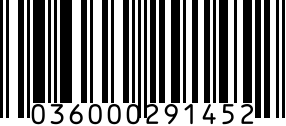
Un Número de Ubicación Global (GLN) es un identificador GS1 de 13 dígitos que identifica de forma única una ubicación física u organizativa en la cadena de suministro. Donde el GTIN identifica un producto, el GLN identifica el lugar que envía, recibe o posee el producto. Ejemplos: la sede de un fabricante, el centro de distribución concreto de un mayorista, el servicio de urgencias de un hospital, un pasillo individual en un almacén de Walmart.
Tanto los GLN como los GTIN se emiten desde el mismo Prefijo de Empresa GS1. Si licencias un prefijo a través de la organización miembro de GS1 de tu país, puedes crear GTIN para productos Y GLN para ubicaciones desde ese mismo espacio de nombres. La estructura refleja UPC/EAN: Prefijo de Empresa + Referencia de Ubicación + dígito de control (Mod 10, misma fórmula que EAN-13).
Estructura del GLN: 13 dígitos
Misma forma que EAN-13. Dígitos 1–N: Prefijo de Empresa GS1 (longitud según tu tramo de licencia — típicamente 7-10 dígitos). Dígitos N+1 a 12: referencia de ubicación asignada por tu empresa (tú los controlas). Dígito 13: dígito de control Mod 10, calculado idénticamente a EAN-13. Ejemplo: 0012345000016 — '001234' es el Prefijo de Empresa (ficticio), '500001' la referencia de ubicación, '6' el dígito de control. La referencia de ubicación puede identificar un edificio, una planta, un muelle de carga, o una entidad lógica como 'departamento de cuentas por pagar' según cómo estructures tu numeración.
Para qué se usa el GLN
Tres usos clave. (1) Transacciones EDI — cada pedido EDI 850, aviso de envío 856 y factura 810 intercambiado entre minoristas y proveedores identifica al comprador, vendedor, origen, destino y facturado mediante GLN en lugar de direcciones en texto. Resuelve la ambigüedad de '¿es el mismo edificio o solo el mismo nombre de calle?'. (2) Sanidad — el GLN identifica el hospital, la farmacia concreta, el quirófano, incluso cabeceras de pacientes individuales para seguimiento de dispositivos médicos. Requerido por las reglas FDA UDI para muchas clases. (3) Cadena farmacéutica — el DSCSA usa el GLN para identificar fabricante, reacondicionador, distribuidor mayorista y dispensador en los datos de eventos EPCIS.
Cómo obtener un GLN
A través de GS1 US (o la filial GS1 de tu país). Tres vías: (a) Si ya tienes un Prefijo de Empresa GS1 para UPC/EAN, puedes crear GLN desde el mismo prefijo sin coste extra — entra en tu cuenta GS1 US Data Hub y crea GLN en 'Locations'. (b) Las organizaciones miembro de GS1 venden identificadores GLN sueltos por separado si no necesitas un Prefijo completo. (c) Los GLN específicos de sanidad pueden asignarse vía GS1 Healthcare US, que proporciona registro adicional en el Healthcare Provider Index.
GLN vs Prefijo de Empresa vs GTIN — confusión fácil
Son tres capas del mismo sistema GS1. (1) Prefijo de Empresa GS1 — el espacio de nombres numérico asignado a tu empresa. Todo lo demás se construye encima. (2) GTIN — un número de producto creado dentro de tu prefijo (12, 13 o 14 dígitos). (3) GLN — un número de ubicación creado dentro de tu prefijo (13 dígitos). Mismo registro (GS1 GEPIR), mismo cálculo de dígito de control, propósito distinto. Un solo prefijo de empresa puede generar miles de GTIN y GLN desde la misma asignación.
Componentes de extensión GLN (GLN+)
A veces llamado 'GLN con extensión', permite identificar una SUB-ubicación dentro de un GLN principal. El GLN base identifica el edificio; una extensión (identificador de aplicación GS1 254) identifica un pasillo, bahía o departamento concreto. Ejemplo: GLN 0012345000016 + extensión 'A03-B12' identifica el pasillo 03, bahía 12 dentro de ese almacén. Muy usado en recepción 3PL y avisos de envío EDI 856 para dar instrucciones de ubicación precisas.
Dónde aparece el GLN en sistemas reales
En la mayoría de sitios donde aparece, nunca lo ves directamente — es un campo EDI en segundo plano de las integraciones proveedor-minorista. Apariciones visibles: etiquetas de código de barras en cartones de envío (representado como GS1-128 con identificador de aplicación (414) para la ubicación), datos de eventos EPCIS farmacéuticos, y GLN de sanidad impresos en facturas de hospital para identificar el departamento de facturación. Si te integras con un minorista como Walmart, Target o Costco vía EDI, el minorista te enviará sus GLN de destinos y exigirá que registres tu GLN como proveedor de referencia.
FAQ
¿Qué es un número GLN?
Un Número de Ubicación Global GS1 de 13 dígitos que identifica de forma única una ubicación física (un edificio, almacén, pasillo) o una entidad organizativa (un departamento, una entidad jurídica) en la cadena de suministro. Mismo Prefijo de Empresa que tus códigos UPC, propósito distinto — el GTIN identifica productos, el GLN lugares.
¿En qué se diferencia un GLN de un GTIN?
El GTIN identifica un PRODUCTO (lo que vendes). El GLN identifica una UBICACIÓN (de dónde se envía o adónde va). Ambos se emiten desde el mismo Prefijo de Empresa GS1 y usan el mismo cálculo de dígito de control Mod 10. El GTIN aparece en el envase como código UPC/EAN; el GLN aparece en documentos EDI y etiquetas de cartón (codificado como GS1-128 con identificador de aplicación (414)).
¿Cuánto cuesta un GLN?
Si ya tienes un Prefijo de Empresa GS1, los GLN son gratis — los creas desde tu espacio de nombres existente vía GS1 US Data Hub. Sin prefijo, las organizaciones miembro de GS1 venden GLN sueltos sin cuota recurrente. La mayoría de empresas que necesitan GLN ya tienen un Prefijo de Empresa de su trabajo de UPC minorista.
¿Quién usa GLN?
Tres grupos principales. (1) Minoristas y proveedores con EDI — Walmart, Target, Costco, Kroger exigen identificadores GLN en documentos EDI 850/856/810. (2) Sanidad — hospitales, farmacias, cumplimiento FDA UDI para dispositivos médicos. (3) Cadena farmacéutica — el DSCSA usa el GLN en datos de eventos EPCIS para identificar fabricantes, mayoristas, dispensadores.
¿El GLN es lo mismo que un SSCC?
No. El GLN identifica UBICACIONES (un edificio o departamento). El SSCC (Código de Contenedor de Envío Serial) identifica una UNIDAD DE ENVÍO concreta — un palé, una caja, un cartón movido entre ubicaciones. Ambos son identificadores GS1, comparten el mismo Prefijo de Empresa, pero sirven a propósitos completamente distintos. Un envío típico usa GLN en la cabecera EDI (origen, destino) y SSCC en cada palé físico de la carga.
¿Mi empresa necesita un GLN?
Solo si intercambias EDI con minoristas (Walmart, Target, Costco), gestionas cumplimiento de cadena farmacéutica o de dispositivos médicos, u operas múltiples ubicaciones físicas que necesitan identificación inequívoca en transacciones B2B. Los pequeños e-commerce que venden solo en Amazon/Etsy generalmente no necesitan GLN — la plataforma gestiona la identificación de ubicación internamente. En cuanto empiezas integración directa proveedor-minorista vía EDI, necesitarás uno.
Related generators
Need a real barcode now?
Generate a valid UPC-A barcode in seconds, no watermark. Free for casual use; paid plans from $9/mo for higher volume.